
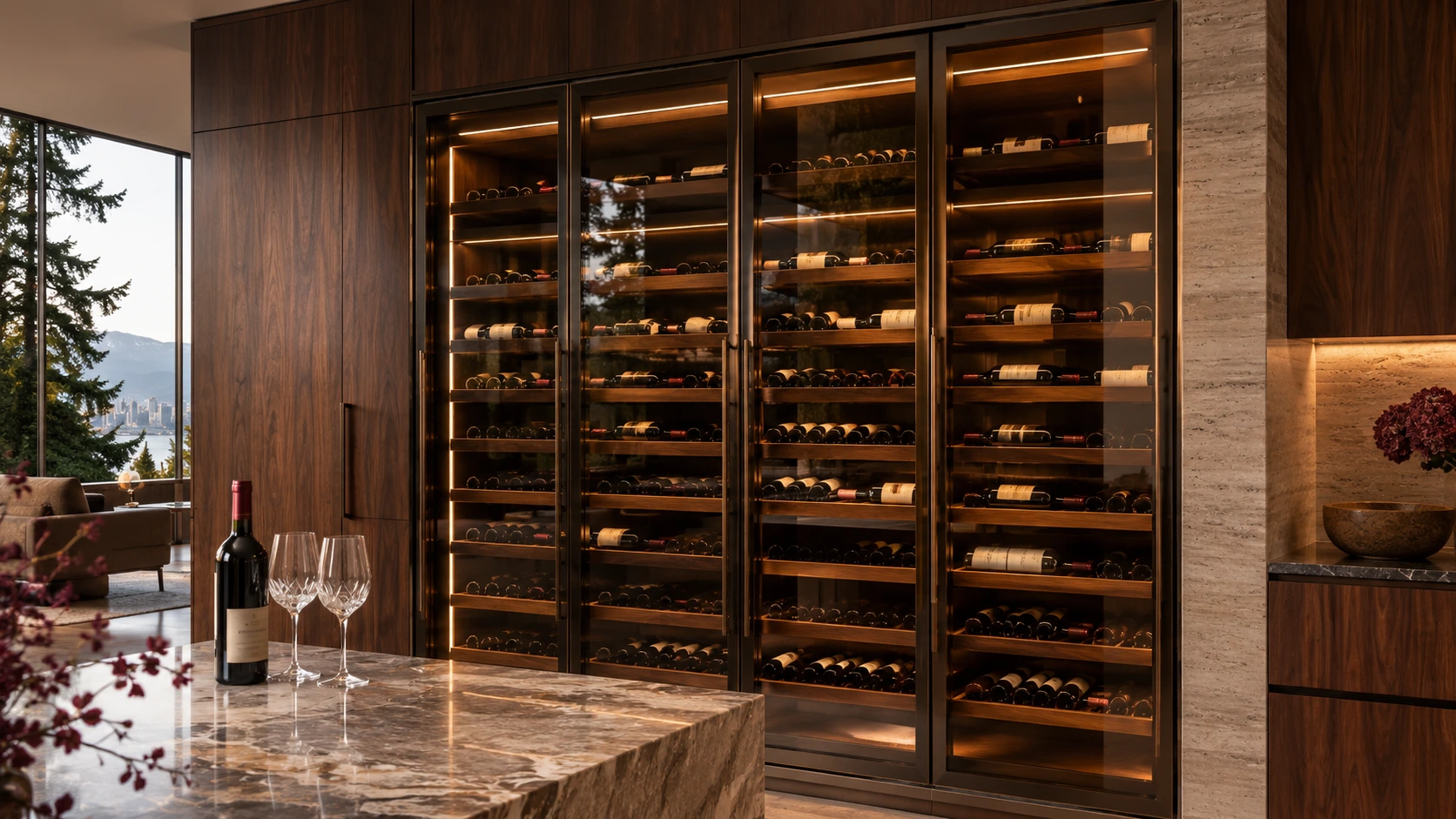
Choosing the right wine cooler is about more than keeping bottles cold. Whether you enjoy occasional tastings or collect bottles for future celebrations, proper storage helps preserve flavour, aroma, and quality.
For homeowners in Vancouver, British Columbia, and other parts of Western Canada, choosing a wine cooler also means considering available space, indoor temperatures, and long-term storage needs.
This wine cooler guide explains the differences between cooling systems, ideal storage conditions, capacity requirements, and installation considerations so you can make an informed decision.
Why Proper Wine Storage Matters
Wine responds to its surroundings. Excessive heat can accelerate ageing, while frequent temperature changes may affect its development over time.
Light, vibration, and unsuitable humidity can also influence storage conditions, particularly for bottles intended to mature over several years.
A dedicated wine cooler creates a more controlled environment than an ordinary kitchen refrigerator.
Standard refrigerators are designed for everyday food storage, with temperatures generally colder than those recommended for long-term wine preservation.
For collectors, consistency matters more than simply achieving the lowest possible temperature.
Wine Cooler vs. Wine Cellar: What’s the Difference?
Although both solutions protect wine, they serve different purposes.
A wine cooler is a refrigerated appliance designed to store bottles within a controlled temperature range. It works well in kitchens, dining rooms, entertainment areas, and smaller residential spaces.
A wine cellar is a dedicated storage environment that can accommodate larger collections and incorporate specialized climate control, lighting, shelving, and architectural features.
Wine coolers are often suitable for smaller collections or bottles intended for regular enjoyment.
Dedicated cellars may be more appropriate when storage capacity, collection organization, and long-term preservation become priorities.
Understanding this distinction helps homeowners avoid investing in equipment that does not match their needs.
Understanding Different Wine Cooler Types
Freestanding Wine Coolers
Freestanding units offer flexibility because they can be positioned in suitable areas without being permanently integrated into cabinetry.
They are often practical for homeowners who want a straightforward storage solution.
However, manufacturers typically require adequate ventilation around the appliance. Placing a freestanding unit inside enclosed cabinetry can interfere with cooling performance.
Built-In Wine Coolers
Built-in models are designed for installation within compatible cabinetry.
They are popular in modern kitchens, home bars, and entertainment spaces where a streamlined appearance is important.
Before installation, confirm the manufacturer’s ventilation requirements, electrical specifications, and recommended clearances.
Single-Zone and Dual-Zone Coolers
Single-zone coolers maintain one temperature throughout the storage compartment.
They are suitable for collections stored at a consistent preservation temperature.
Dual-zone models provide separate temperature areas, allowing owners to keep different wines closer to their preferred serving temperatures.
However, two zones are not automatically necessary for every collection.
What Is the Best Temperature for Wine Storage?
For mixed collections intended for preservation, approximately 12°C to 14°C is a useful general target.
Maintaining a stable temperature is usually more important than making frequent adjustments.
Serving temperatures are different from storage temperatures.
White wines are often enjoyed cooler than reds, but that does not mean both varieties require completely separate long-term storage environments.
A wine cooler with adjustable settings allows homeowners to select temperatures based on their intended use.
For valuable or ageing collections, consult the wine producer’s storage recommendations when available.
Does Western Canada’s Climate Affect Wine Storage?
Western Canada includes several different climate conditions.
Vancouver experiences relatively mild coastal temperatures, while interior British Columbia and parts of Alberta can experience greater seasonal temperature variations.
These differences matter when selecting a location for wine storage.
A cooler placed near a sunny window, heating vent, or frequently opened exterior door may experience additional environmental stress.
Basements and interior rooms can provide more consistent surroundings, although conditions vary between properties.
Homeowners should also consider seasonal indoor heating, air conditioning, and direct sunlight.
The objective is to create a stable environment rather than relying on outdoor climate alone.
How Much Wine Cooler Capacity Do You Need?
Wine cooler capacity is commonly advertised according to the number of bottles an appliance can accommodate.
However, advertised capacity often assumes standard bottle dimensions.
Champagne bottles, larger Burgundy bottles, and unusual shapes may reduce usable storage space.
Consider your current collection and how quickly it may grow.
A homeowner with twenty bottles might prefer additional capacity rather than purchasing an appliance that is immediately full.
Also consider whether bottles will be stored horizontally and whether shelves can accommodate different shapes.
Accessible storage is particularly important when you regularly rotate your collection.
Compressor vs. Thermoelectric Cooling
Compressor wine coolers use refrigeration technology to maintain selected temperatures.
They are commonly chosen for larger capacities and environments where consistent cooling performance is important.
Thermoelectric systems use a different cooling mechanism and may operate quietly under suitable conditions.
However, their performance can depend significantly on surrounding temperatures.
For Western Canadian homes, consider the actual indoor environment and the manufacturer’s operating range before selecting either system.
Neither technology should be judged solely by its name.
Capacity, insulation, efficiency, noise, and installation requirements all deserve attention.
Important Features to Consider
Temperature control is essential, but several additional features can improve the storage experience.
UV-resistant glass can help limit exposure to potentially damaging ultraviolet light.
Vibration management may be useful for bottles stored over extended periods.
Adjustable shelving makes it easier to accommodate different bottle sizes.
Interior lighting should provide visibility without introducing unnecessary heat.
Door seals, energy consumption, and accessible controls are also worth evaluating.
For long-term storage, humidity deserves consideration, especially when bottles use natural cork closures.
Not every wine cooler actively regulates humidity, so review the specifications carefully.
Common Wine Cooler Placement Mistakes
One common mistake is choosing an appliance based on appearance without checking ventilation requirements.
Another is installing a cooler near heat-producing appliances or in direct sunlight.
Homeowners should also avoid assuming that every wine cooler is suitable for garages or unheated spaces.
Operating temperature limits vary by manufacturer.
Before purchasing, measure the available installation area, including door clearance and ventilation space.
Confirm that electrical access is suitable and that the floor can safely support the loaded appliance.
Thoughtful planning can prevent unnecessary installation complications.
When Should You Consider a Custom Wine Cellar?
As a collection expands, a wine cooler may no longer provide sufficient capacity or organization.
Collectors may want dedicated areas for different bottle formats, long-term ageing, and convenient inventory management.
A custom wine cellar can also integrate storage into the architecture of a home.
For inspiration, explore the custom wine cellar designs by Timeless Wine Cellars.
The right solution depends on collection size, available space, preservation goals, and personal preferences.
Final Thoughts
Selecting a wine cooler requires balancing practical storage needs with available space and environmental conditions.
For homeowners across Western Canada, temperature stability, ventilation, capacity, and placement are especially important considerations.
Start by understanding how you use your collection today and how your storage needs might change.
Whether you choose a compact appliance or eventually explore a dedicated cellar, thoughtful storage decisions can help protect the wines you value.
