
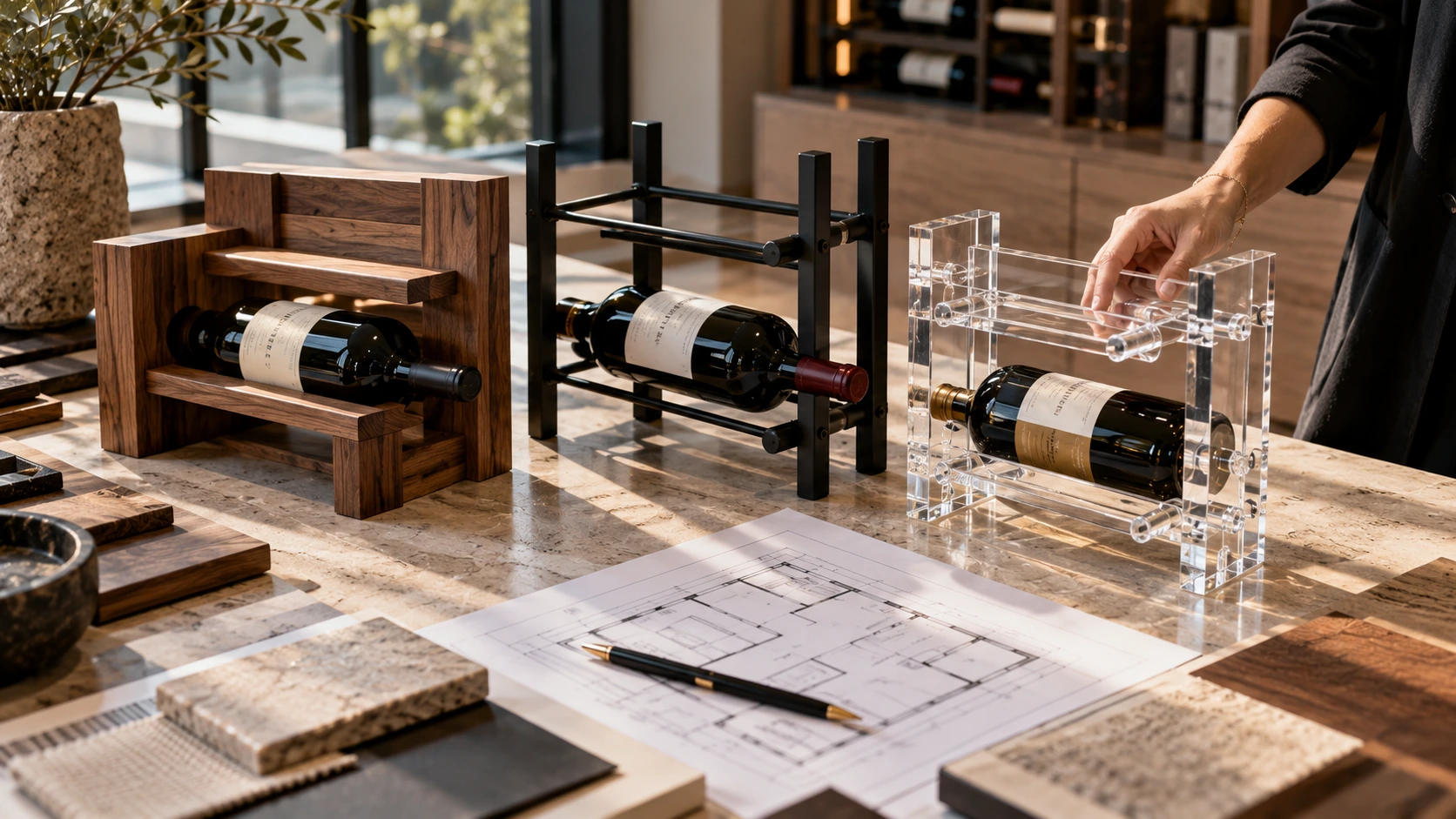
Choosing a wine rack is about more than finding somewhere to keep your bottles. The material you choose can influence how your collection looks, how much space it occupies, how easily you can access individual bottles, and how well the storage integrates with your home.
Wood, metal, and acrylic are three popular materials for residential wine storage, but they create very different visual and practical results. A warm wooden rack may complement traditional cabinetry, while a slim metal display can suit a contemporary dining room. Clear acrylic can offer a lighter appearance, especially in spaces where you want the bottles to stand out rather than the storage system itself.
None of these materials is automatically the best choice for every home. The right decision depends on your collection, available space, design preferences, and how you intend to use the installation.
This guide compares wood, metal, and acrylic wine racks to help you understand their differences before choosing a storage system.
Wood vs. Metal vs. Acrylic Wine Racks: A Quick Comparison
Before looking at each material in detail, it helps to compare the characteristics that matter most to homeowners.
| Feature | Wood Wine Racks | Metal Wine Racks | Acrylic Wine Racks |
|---|---|---|---|
| Overall appearance | Warm, natural, traditional or contemporary | Sleek, architectural, modern or industrial | Transparent, minimal, visually light |
| Design flexibility | Cabinets, cubbies, shelving and modular systems | Wall-mounted displays, pegs and structural frameworks | Clear shelves, individual supports and display systems |
| Visual impact | Often more substantial | Depends on the thickness and layout of the components | Can make the storage structure less visually prominent |
| Space efficiency | Depends on rack depth and configuration | Slim wall-mounted options may preserve floor space | Compact displays may work well in visually constrained areas |
| Maintenance | Dusting and care appropriate to the finish | Cleaning appropriate to the coating or metal finish | Gentle cleaning to reduce scratching and visible marks |
| Best suited to | Warm interiors, cabinetry and traditional cellars | Contemporary spaces and architectural displays | Minimalist interiors and bottle-focused displays |
These are general characteristics, not universal product specifications. A particular rack’s capacity, strength, depth, and installation requirements depend on its design and construction.
Wood Wine Racks: Warmth, Character, and Versatility
Wood has a long history in wine storage, and it remains a popular choice for homeowners who want their collection to feel integrated into the architecture of a room.
Natural grain, colour variation, and the availability of different finishes give wood a distinctive appearance. Depending on the design, wooden wine racks can feel rustic, traditional, contemporary, or highly refined.
Why Choose Wood Wine Racks?
One of wood’s greatest advantages is its ability to work alongside other interior finishes.
In a home with oak cabinetry, walnut furniture, or natural timber detailing, a wooden wine rack can feel like an intentional extension of the surrounding design.
Wood is also well suited to a variety of storage arrangements. It can be incorporated into individual bottle compartments, horizontal shelves, case storage, and full-height cabinetry.
This flexibility can be useful for homeowners who want to store different bottle formats or combine display areas with higher-capacity storage.
Do Wooden Wine Racks Take Up More Space?
Not necessarily.
Some wooden wine racks use substantial cabinetry and deep compartments, while others employ relatively compact components or wall-mounted arrangements.
The amount of space required depends more on the configuration than on the material alone.
For example, a traditional wooden cabinet may occupy considerable floor space, but a carefully planned wall-mounted wooden system could have a much smaller footprint.
When comparing options, look at the actual rack dimensions, bottle orientation, and clearance needed for access.
What About Durability and Maintenance?
A properly constructed wooden wine rack can provide long-lasting storage, but wood responds to its environment.
Changes in moisture and temperature can affect certain wood products and finishes over time. The species, construction method, protective finish, and installation conditions all matter.
Routine care typically involves removing dust and cleaning surfaces according to the manufacturer’s recommendations.
Homeowners should also avoid assuming that a wooden rack alone creates appropriate conditions for ageing wine. The storage environment remains a separate consideration.
Where Does Wood Work Best?
Wooden wine storage is particularly appealing in:
- Traditional or transitional homes
- Dining rooms with natural timber finishes
- Built-in cabinetry and dedicated wine rooms
- Interiors where warmth and texture are important
- Collections requiring a combination of display and practical storage
For examples of different wooden wine storage designs, the Timber Collection from Timeless Wine Cellars offers several approaches to incorporating wood into residential wine displays.
Metal Wine Racks: Clean Lines and Architectural Flexibility
Metal wine racks are often associated with contemporary interiors, but their appeal extends beyond a modern appearance.
Metal components can be designed in slim profiles, making them useful for installations where homeowners want the bottles to remain visually prominent.
Depending on the system, metal racks may display bottles horizontally, label-forward, or at an angle.
Why Choose Metal Wine Racks?
Metal can create a clean, structured appearance without requiring large amounts of surrounding cabinetry.
This makes it attractive for dining rooms, entertainment areas, and feature walls where wine storage forms part of the interior design.
Finishes can also influence the overall effect.
Dark metal may provide contrast against pale walls, while bronze or other warmer finishes can complement natural wood and stone.
The final appearance depends on the specific product, finish, and installation details.
Are Metal Wine Racks Better for Small Spaces?
Certain metal systems can be particularly effective in compact spaces because they use narrow structural components and may be mounted directly to a suitable wall.
However, slim construction does not automatically mean greater bottle capacity.
A label-forward metal display, for example, may use more wall width per bottle than a denser neck-forward arrangement.
It is important to compare the number of bottles a system holds within the available wall area, not just the thickness of its components.
How Durable Are Metal Wine Racks?
Metal wine racks can provide strong, stable support when correctly designed and installed.
Their performance depends on factors such as the metal used, component thickness, mounting hardware, surface finish, and supporting wall structure.
Corrosion resistance also varies by material and finish, particularly in environments where moisture may be present.
For wall-mounted systems, secure installation into an appropriate supporting structure is essential. The appearance of a lightweight rack should not be confused with the weight of a fully loaded installation.
Where Does Metal Work Best?
Metal wine storage may be a strong fit for:
- Contemporary dining rooms
- Modern condominiums
- Open-plan residential interiors
- Feature walls with limited floor space
- Homeowners seeking an architectural bottle display
The Forge Collection includes metal wine rack designs that illustrate how different configurations can change the look of a wine display.
Acrylic Wine Racks: Transparency and a Minimalist Appearance
Acrylic wine racks offer a different design approach.
Rather than drawing attention to the storage structure, clear acrylic can allow the bottles themselves to become the main visual feature.
This transparent appearance can be particularly appealing in modern interiors where homeowners prefer clean lines and restrained detailing.
Why Choose Acrylic Wine Racks?
The defining characteristic of clear acrylic is its visual transparency.
When used thoughtfully, it can reduce the apparent weight of a wine display, especially against a light wall or within a carefully designed architectural setting.
This does not mean the rack occupies less physical space. Instead, it may make the installation feel less visually dominant.
For homeowners who want to display a collection without introducing substantial-looking shelving, this can be a useful design advantage.
Are Acrylic Wine Racks Suitable for Small Rooms?
They can be.
In a compact dining area or narrow residential space, clear acrylic may help maintain a sense of openness.
However, the physical depth, mounting requirements, and bottle capacity still need to be evaluated.
A transparent rack that projects too far into a walkway can create the same practical problem as any other material.
The benefit is primarily visual unless the specific product also offers a compact configuration.
Is Acrylic Durable Enough for Wine Storage?
Acrylic can be used successfully in purpose-designed wine storage systems, but its performance depends on material quality, thickness, fabrication, and installation.
It is also important to consider surface care.
Clear acrylic may show fingerprints, dust, and scratches more readily than some opaque materials. Certain cleaning chemicals can damage acrylic surfaces, so cleaning products should be selected according to the manufacturer’s instructions.
Acrylic should not be treated as interchangeable with glass. Although both can appear transparent, their physical properties and care requirements differ.
Where Does Acrylic Work Best?
Acrylic wine storage can complement:
- Minimalist residential interiors
- Contemporary dining rooms
- Compact feature walls
- Spaces where visual openness matters
- Bottle-focused display installations
Homeowners interested in transparent wine storage can explore the Ice Collection, which includes clear acrylic shelving and display options.
Which Wine Rack Material Uses the Least Space?
This is one of the most important questions for homeowners working with a limited area.
The answer is that rack configuration usually matters more than material.
A slim metal rack may use very little visible structure, but its bottle orientation could require considerable wall width.
A wooden system with deeper compartments may look larger, yet accommodate more bottles within a given section of wall.
An acrylic display may appear less intrusive, but it still needs sufficient depth and clearance.
To evaluate space efficiency accurately, compare three measurements.
1. Wall Area
How much width and height does the installation require for the desired bottle count?
A system displaying bottle labels outward may need more wall area than one storing bottles with their necks facing forward.
2. Projection From the Wall
How far do the racks and bottles extend into the room?
This is especially important in hallways, narrow dining rooms, and areas where people regularly walk past the display.
3. Usable Bottle Capacity
How many bottles can be stored safely and accessed comfortably?
The stated capacity should also be checked against the types of bottles in your collection.
Champagne bottles, magnums, and unusually shaped bottles may require additional clearance.
A wine rack that looks compact in a photograph may not provide the capacity you need in practice.
Which Material Is Best for Displaying Wine Labels?
For homeowners who enjoy seeing individual wine labels, the orientation of the bottles is more important than the material itself.
Wood, metal, and acrylic systems can all be designed to present labels visibly, depending on the product.
However, the materials create different visual effects.
Wood may frame each bottle with warmth and texture.
Metal can create a strong contrast that emphasizes bottle shapes and label designs.
Clear acrylic can make the supporting structure less noticeable, drawing attention to the collection itself.
There is also a practical trade-off.
Label-forward displays often require more wall space per bottle than denser storage configurations.
If your collection is large, you may want to combine a display section for selected bottles with a more space-efficient area for everyday storage.
How Do the Materials Compare for Long-Term Wine Storage?
The material of the rack is only one part of proper wine storage.
For bottles intended for long-term ageing, temperature stability, light exposure, humidity, vibration, and bottle accessibility deserve careful attention.
A beautifully designed wine rack placed near a sunny window or heating source may not provide suitable conditions for preserving valuable bottles.
Temperature
Wine generally benefits from cool, relatively stable storage conditions.
For many wines intended for extended ageing, temperatures around 12 to 14°C are commonly used as a reference, although appropriate conditions depend on the wine and storage objectives.
The rack material does not replace the need for environmental planning.
Light Exposure
Direct sunlight and prolonged exposure to strong light can be undesirable for wine storage.
If a wine display includes accent lighting, the lighting design should consider heat output and exposure rather than appearance alone.
Humidity
Humidity matters particularly when wines are sealed with natural corks.
Extremely dry or damp conditions can create problems for wine storage or surrounding materials.
Wood, metal, and acrylic also have different environmental sensitivities, so product specifications should be reviewed when planning a controlled wine room.
Bottle Position
Many wines sealed with natural corks are traditionally stored horizontally for extended periods.
However, storage recommendations can vary with closure type and intended duration.
The rack should support the bottle securely in the orientation appropriate for the collection.
Ultimately, a well-designed wine storage environment matters more than choosing one rack material over another.
What About Cleaning and Everyday Maintenance?
Maintenance is easy to overlook when choosing a wine display, especially when the initial focus is on appearance.
However, the way a rack is cleaned can influence how practical it feels over time.
Wood: Usually requires gentle dusting and cleaning appropriate to the finish. Excessive moisture and unsuitable cleaning products may damage some surfaces.
Metal: Often straightforward to maintain, although the correct cleaning method depends on the metal and protective coating. Abrasive products can damage certain finishes.
Acrylic: Benefits from soft, non-abrasive cleaning materials and acrylic-compatible products. Scratches and fingerprints may be more visible on clear surfaces.
The complexity of the rack also matters.
Intricate bottle compartments and tightly spaced supports may take longer to clean than simpler arrangements.
If you regularly remove and replace bottles, consider whether the layout provides enough clearance to do so without repeatedly touching adjacent surfaces.
How to Match Wine Racks With Your Interior Design
A wine rack should feel connected to the surrounding architecture rather than added as an afterthought.
Material selection is one way to achieve that connection.
Traditional and Transitional Homes
Wood often works naturally with detailed cabinetry, warm finishes, and established architectural features.
A combination of wooden storage and complementary metal details can also create a balanced appearance.
Contemporary Homes
Metal racks can suit interiors with simple lines, stone finishes, and restrained decorative elements.
A dark finish against a light wall can create contrast, while a warmer finish may soften the overall look.
Minimalist Interiors
Clear acrylic can support a visually understated installation.
It may be especially effective when the intention is to showcase bottles without making the supporting structure a dominant feature.
Mixed-Material Interiors
There is no requirement to use only one material.
Wood, metal, and acrylic can sometimes be combined within a broader design, provided the components are compatible and the overall arrangement remains cohesive.
For example, a homeowner may prefer a visually prominent display for selected bottles alongside more conventional storage for the rest of the collection.
The goal is not simply to match a rack to a decorating style. It is to create a storage arrangement that feels appropriate for the room and works well in everyday use.
Five Questions to Ask Before Choosing a Wine Rack Material
Before making a decision, consider the following questions.
1. How Many Bottles Do You Need to Store?
Your current collection and expected growth will influence the type of system that makes sense.
A display intended for 30 bottles has different requirements from storage planned for several hundred.
2. How Much Space Is Available?
Measure the width, height, and depth of the proposed location.
Also consider nearby furniture, doors, walkways, and other architectural features.
3. Will the Wine Be Displayed or Stored for Ageing?
A decorative display may prioritize visual presentation.
A long-term storage installation requires additional consideration of environmental conditions and accessibility.
4. How Often Will You Access the Bottles?
Frequently used bottles should be easy to retrieve.
A visually striking arrangement is less practical if removing one bottle requires moving several others.
5. Which Material Complements the Room?
Consider the existing finishes, furniture, lighting, and architectural details.
A wine display should contribute to the room’s design while remaining functional.
Answering these questions will usually provide more useful direction than choosing a material based on appearance alone.
Choosing Wine Racks for Vancouver Homes
Residential spaces in Vancouver and the Lower Mainland vary widely, from compact condominiums to larger homes with dedicated entertainment areas or basement storage.
That variety makes it especially important to evaluate the actual installation location.
A narrow wall in a condominium may benefit from a visually light display, while a larger dedicated wine room may accommodate a combination of storage types.
Homeowners should also consider the surrounding environment.
Indoor heating, seasonal temperature changes, moisture conditions, and direct sunlight can all influence whether a location is suitable for displaying or preserving wine.
For wall-mounted systems, the supporting structure and installation requirements need to be confirmed before choosing a rack.
The best result comes from balancing the available space, the characteristics of the collection, and the desired interior appearance.
Wood, Metal, or Acrylic: Which Should You Choose?
There is no single winner in the comparison between wood, metal, and acrylic wine racks.
Choose wood if you prefer natural texture, warmth, and storage that can integrate with traditional or contemporary cabinetry.
Choose metal if you favour clean architectural lines, contemporary finishes, and potentially slim wall-mounted configurations.
Choose acrylic if you want a transparent, visually light display that keeps attention on the bottles.
If space efficiency is your main concern, compare actual product dimensions and bottle capacity before deciding.
If long-term preservation is your priority, evaluate the environmental conditions of the proposed storage location as carefully as the rack itself.
And if your collection includes different bottle formats or continues to grow, look for a configuration that can accommodate those practical requirements.
Final Thoughts
Choosing between wood, metal, and acrylic wine racks is ultimately about finding the right balance between appearance, capacity, accessibility, and available space.
Each material offers distinct design possibilities, but the details of the storage system matter just as much as the material.
A thoughtful decision begins with understanding your collection and the room where it will be stored.
Timeless Wine Cellars offers several design directions through its Collections, including the Timber, Forge, and Ice collections.
Comparing these options can help you identify a wine storage approach that complements your home while meeting your practical needs.
